
Sustainable Steam Cleaning in Commercial Kitchens
Posted on
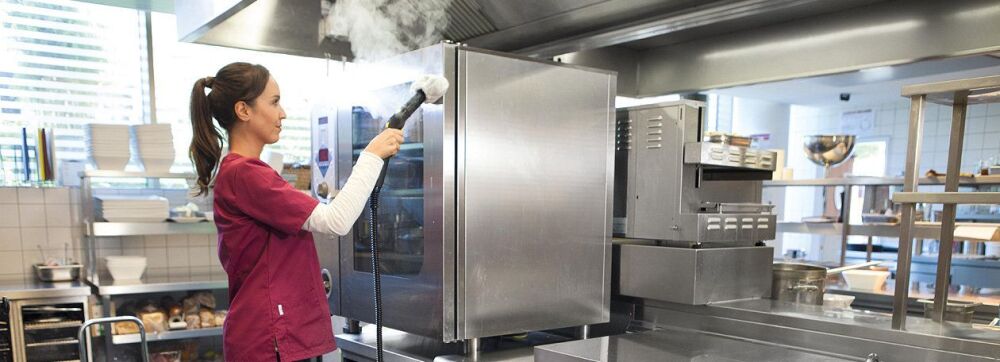
Key Takeaways
- Steam cleaning keeps commercial kitchens hygienic without drowning everything in chemicals or paperwork
- It uses high temperature vapour to break down grease that normally clings on like it pays rent
- It reduces water usage, chemical waste, and downtime during cleaning cycles
- Staff training matters more than people think, mostly because steam is not a toy, despite how it looks
- Choosing the right system shapes long-term costs, compliance, and how often someone has to scrub behind the fryer
Check out our range of sustainable steam cleaners for Commercial Kitchens!
Sustainable Steam Cleaning in Commercial Kitchens
Steam cleaning in commercial kitchens is becoming less of a “nice idea” and more of a “why didn’t we do this sooner” moment for food businesses trying to stay clean, compliant, and vaguely sane. It replaces heavy chemical use with high temperature vapour that lifts grease and grime in a way that feels almost unfair to the dirt. The shift towards steam cleaning in commercial kitchens is not just about hygiene, it is about sustainability, cost control, and reducing the daily drama of cleaning rotas that nobody reads properly anyway.
Why does sustainability matter so much in kitchen hygiene?
Because commercial kitchens are already resource hungry enough without pouring litres of chemicals down every drain. Steam cleaning in commercial kitchens reduces reliance on harsh detergents and cuts waste water output significantly. It also helps businesses meet environmental targets without turning it into a full time spreadsheet exercise. Less chemical runoff means less environmental impact, and fewer storage cabinets filled with bottles that all promise to “cut through grease instantly” but somehow never agree on how.
What does sustainable steam cleaning actually mean in practice?
At its core, it is cleaning with high temperature vapour rather than chemical solutions. Steam cleaning in commercial kitchens works by heating water until it becomes pressurised steam, which then loosens grease, kills bacteria, and lifts residue from surfaces. It sounds simple, almost suspiciously so, but that is part of the appeal. No mixing ratios, no guessing whether someone diluted it correctly, and no mystery smells lingering for three days after.
Why does steam outperform traditional chemical cleaning?
Chemicals rely on contact time and scrubbing. Steam relies on physics doing most of the work. Steam cleaning in commercial kitchens penetrates porous surfaces and softens built up fat deposits that usually require aggressive scrubbing. It is a bit like convincing the grease to leave politely rather than physically evicting it with a scouring pad. That difference matters when cleaning happens daily and not just when someone notices the extractor fan looks like it survived a chip shop fire.
How does steam reduce water and chemical usage?
Water usage drops because steam cleaning in commercial kitchens uses far less liquid volume than traditional hosing or mop systems. Chemicals are reduced or eliminated depending on the application. This matters in busy kitchens where cleaning cycles happen multiple times a day. Less water means less runoff, less drainage strain, and fewer moments of panic when someone realises the mop bucket is doing absolutely nothing except spreading yesterday’s lunch around.
Check out our range of sustainable steam cleaners for Commercial Kitchens!
Where does grease actually build up in commercial kitchens?
Pretty much everywhere it is not supposed to. Behind fryers, inside extraction hoods, around oven seals, and on tiled grout that has given up all hope. Steam cleaning in commercial kitchens targets these hidden areas because the vapour can reach into corners and textured surfaces more effectively than cloth or spray alone. Grease does not just sit politely on flat surfaces, it migrates like it is trying to escape inspection.
How does steam support food safety standards?
Food safety inspectors are not known for their sense of humour, dry or otherwise. Steam cleaning in commercial kitchens helps meet hygiene standards by reducing bacterial load without chemical residue left behind. That means surfaces are not just visibly clean, they are microbiologically cleaner too. It also avoids the issue of chemical traces near food preparation areas, which nobody wants to explain during an audit.
What equipment is used in modern steam cleaning systems?
Modern systems vary from compact portable units to industrial machines designed for full kitchen deep cleans. Steam cleaning in commercial kitchens typically uses pressurised boilers, insulated hoses, and specialised nozzles for targeted cleaning. Some systems are built for daily maintenance, others for periodic deep cleaning that clears out the kind of grime you hope is just shadow and bad lighting.
Steam Clean Systems provides commercial grade equipment designed for professional use, focusing on practical cleaning performance rather than unnecessary complexity that requires a manual thicker than a takeaway menu. Steam Clean Systems
How does steam actually lift stubborn grime?
Steam cleaning in commercial kitchens works through heat and pressure. The high temperature softens fats, oils, and baked on residue. Once loosened, the debris is easier to wipe away or extract. It is not magic, although watching it work on a greasy grill tray does feel like a minor illusion. The key is thermal shock, which essentially persuades dirt to stop clinging so aggressively.
What does staff training look like for steam systems?
It is less complicated than people expect, but still important. Steam cleaning in commercial kitchens requires basic training on safety, nozzle use, and surface compatibility. The biggest lesson is usually “do not point it at yourself,” which sounds obvious until someone gets enthusiastic on a Monday morning. Once trained, staff tend to prefer it because it reduces scrubbing time and avoids chemical handling altogether.
What mistakes do operators commonly make?
The most common mistake is assuming more pressure equals better cleaning. Steam cleaning in commercial kitchens works best with controlled application, not blasting everything like a pressure washer in a DIY nightmare. Another mistake is skipping routine use and saving steam for “deep cleans only,” which usually results in deep cleans becoming very deep indeed.
How does steam cleaning affect operating costs?
Costs are influenced by equipment investment, training, and energy use, but steam cleaning in commercial kitchens often reduces ongoing spend on chemicals and water. Labour time can also decrease because surfaces clean faster. The real saving tends to show up in fewer emergency deep cleans and less equipment degradation caused by harsh chemical use over time.
What is the environmental impact in real terms?
Steam cleaning in commercial kitchens reduces chemical discharge into wastewater systems and lowers plastic packaging from cleaning products. It also reduces water consumption compared to traditional washdown methods. The environmental benefit is not abstract, it is measurable in reduced supply orders and fewer disposal headaches. Kitchens tend to notice when their chemical cupboard stops looking like a small laboratory.
How do businesses choose the right steam cleaning provider?
They usually look at reliability, service support, and whether the equipment fits their kitchen scale. Steam cleaning in commercial kitchens is not one size fits all, so system selection matters. A good provider helps match equipment to usage patterns rather than overselling features nobody asked for. It is a bit like buying shoes that actually fit instead of just admiring them in the box.
What does steam cleaning look like in a real kitchen setting?
Picture a busy service kitchen after a full shift. Surfaces coated in grease, floors slightly questionable, and extractor units working overtime. Steam cleaning in commercial kitchens steps in during shutdown, breaking down build up without turning the space into a chemical fog. The process is quicker than traditional deep cleans and leaves surfaces ready for immediate use once dry.
Why are more kitchens switching to steam systems?
Because it simplifies cleaning without lowering standards. Steam cleaning in commercial kitchens reduces reliance on consumables, speeds up hygiene routines, and helps staff keep control of environments that can otherwise get away from them quickly. It is less about reinvention and more about making the daily grind slightly less grim, which in hospitality counts as progress.
Where does this leave steam cleaning in commercial kitchens?
Steam cleaning in commercial kitchens brings a more controlled and less chemical heavy approach to hygiene, making daily cleaning faster, simpler, and more consistent without sacrificing standards. It reduces reliance on harsh products, cuts down water use, and helps staff deal with grease and build up before it becomes a bigger problem. In practice, steam cleaning in commercial kitchens just makes the whole cleaning routine less of a battle and more of a predictable part of the working day, which is about as close to luxury as a busy kitchen gets.
Check out our range of sustainable steam cleaners for Commercial Kitchens!
Add a comment: